
Asbestos soil contamination is defined as the presence of asbestos fragments or microscopic fibres within natural or made ground, and it poses serious health risks when that soil is disturbed. Asbestos fibres can be 50–200 times thinner than human hair, which makes visual detection completely unreliable. The primary danger is inhalation. When contaminated soil is excavated, graded, or even walked over repeatedly, fibres become airborne and enter the lungs. WorkSafe Victoria identifies this as the central risk mechanism for anyone working on or living near affected land. If you suspect your property has a problem, understanding the causes, effects, and remediation options is the first step toward protecting yourself and meeting your legal obligations.
What is asbestos soil contamination and how does it occur?
Asbestos in soil refers to fragments or free fibres from asbestos-containing material present in natural or made ground. The industry term for this hazard is “asbestos-contaminated land,” and it covers everything from a few buried fibro sheets to widespread fibre dispersion through fill material. The contamination is not always the result of deliberate dumping. Many properties across Australia carry it unknowingly.
Common sources of contamination
The most frequent soil contamination causes include:
- Demolition and construction waste disposed of on site or buried rather than taken to an authorised landfill
- Contaminated fill or topsoil brought onto a property from another site, sometimes sourced cheaply without proper testing
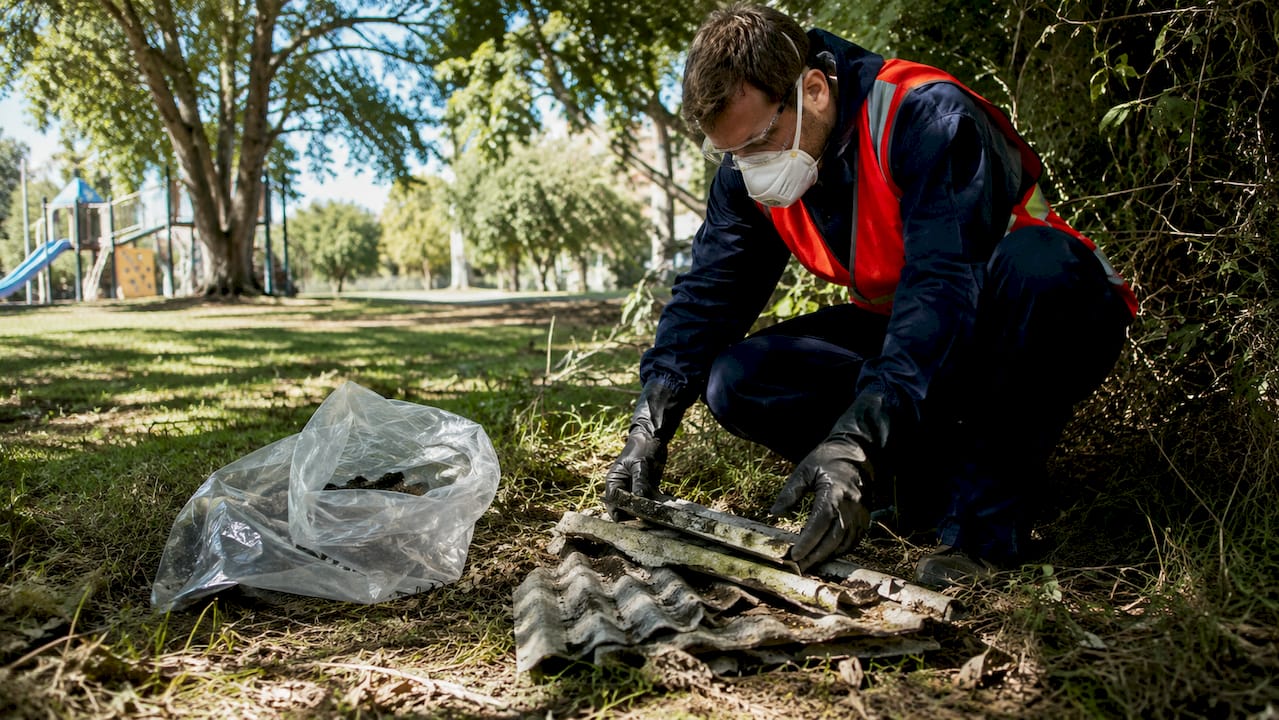
- Degraded asbestos-containing building materials such as fibro sheeting, corrugated roofing, or pipe lagging that has broken down over time and shed fibres into surrounding soil
- Illegal dumping on vacant land, particularly in older residential areas where asbestos products were standard before the national ban took effect in 2003
Sites at elevated risk include pre-1990 residential properties, former industrial land, community parks built on reclaimed ground, and any site that has undergone unregulated fill placement. The risk is not limited to the original contamination point. Fibres migrate.
Pro Tip: If you are buying or renovating a pre-1990 property, request a site history from the local council and ask specifically whether fill material was imported onto the land at any point.
What are the health and environmental effects?
Inhalation is the primary health concern with asbestos-contaminated soil, and the risk increases sharply whenever the soil is disturbed. Diseases linked to asbestos fibre inhalation include mesothelioma, asbestosis, and lung cancer. None of these conditions appear immediately. They develop over decades, which is why contamination that seems harmless today can have devastating consequences later.
Friable vs non-friable asbestos
The form of asbestos present determines how quickly fibres are released. Friable asbestos is crumbled or powdery and releases fibres easily when touched or disturbed. Non-friable asbestos is bonded within a solid matrix and is less immediately dangerous, but it degrades over time. Once bonded material breaks down in soil, it behaves like friable material.
The following factors increase the likelihood of fibre release from contaminated soil:
- Excavation, trenching, or grading work
- Drought conditions that dry out and crack the soil surface
- Wind erosion across bare or disturbed ground
- Heavy rain causing surface runoff that carries fibres off site
- Foot traffic and vehicle movement over contaminated areas
“Environmental factors such as soil pH, erosion, and mechanical disturbances influence asbestos fibre movement and risk beyond immediate site boundaries.” Environmental Ramifications of Asbestos Fibre Movement Through Soil
This means the effects of asbestos contamination are not confined to your property. Fibres can migrate via water and wind into neighbouring land, stormwater systems, and local ecosystems. That is why containment matters well beyond the original site boundary.
How can you identify asbestos contamination in soil?
Visual inspection cannot reliably rule out asbestos in soil. This is the single most important thing to understand about detection. Asbestos fibres are effectively invisible to the naked eye, and misidentification leads either to unnecessary remediation or, more dangerously, to undetected exposure.
What professional assessment involves
A qualified asbestos assessor will develop a sampling strategy based on the planned site activities and excavation depth, rather than treating the entire property as a uniform risk. Sampling strategy should be tailored to what you intend to do with the land. A garden renovation requires a different approach than a full demolition and rebuild.
The assessment process typically includes:
- Site history review to identify likely contamination sources and areas of concern
- Soil sampling at multiple depths and locations, guided by the assessor’s risk judgement
- Laboratory analysis by a NATA-accredited laboratory, which is the standard WorkSafe Victoria recommends when asbestos presence is suspected
- Written report detailing fibre type, concentration, distribution, and recommended management actions
Pro Tip: Do not rely on a general building inspection to cover soil contamination. Request a dedicated asbestos soil assessment from a licensed assessor who works specifically with contaminated land.
The asbestos removal permit process in Australia also requires documented evidence of contamination before licensed removal work can proceed. Getting the assessment done properly from the start saves time and money later.
What are the best practices for remediating asbestos-contaminated soil?
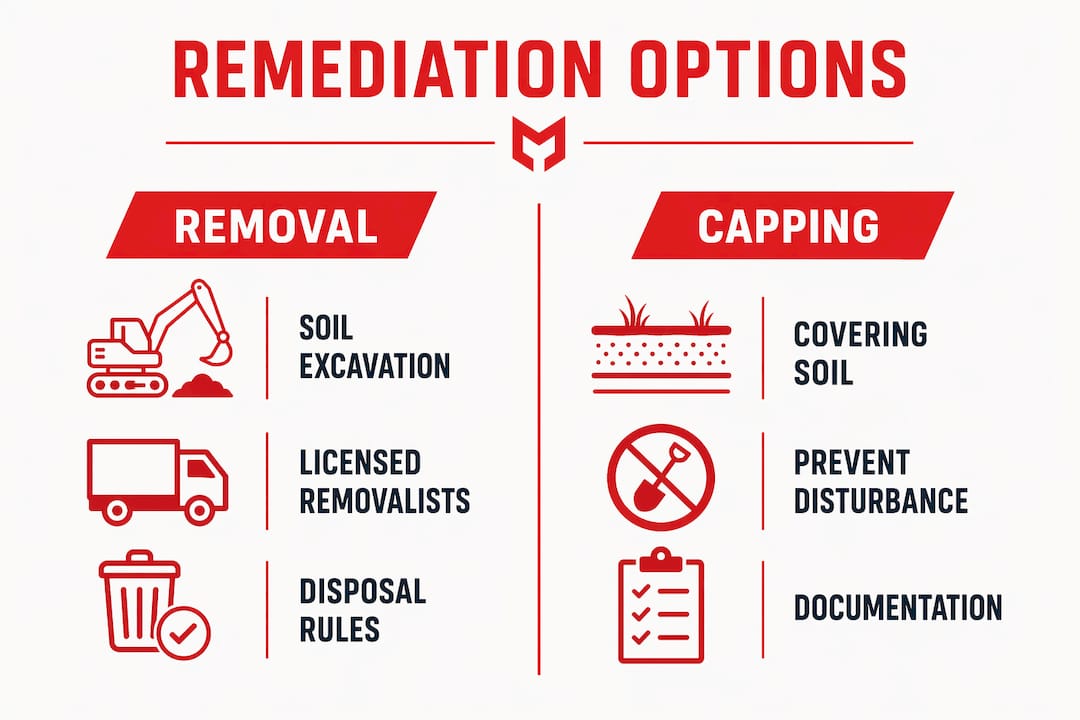
Managing asbestos-contaminated land in Australia involves two primary approaches: removal and capping. The right choice depends on the extent of contamination, the planned use of the site, and practical feasibility. Both approaches carry strict regulatory obligations under EPA and WorkSafe guidelines.
Removal vs capping: a comparison
| Approach | When It Applies | Key Requirements |
|---|---|---|
| Full removal | Practicable for the site; high disturbance activity planned | Class A licensed removalist; double-lined plastic bags labelled as asbestos; disposal to authorised landfill only |
| Capping | Removal not feasible; low disturbance risk | Suitable cover layer installed; contamination recorded on site asbestos register; clearance certificate may be required |
| Ongoing management | Low-risk undisturbed soil with controls in place | Regular monitoring; documented controls; register kept current |
Licensed removalists perform soil excavation and disposal following strict containment and transport regulations. Contaminated soil must be sealed in double-lined plastic clearly labelled as asbestos waste and transported to an authorised landfill. No other disposal method is legally acceptable.
When full removal is not practicable, capping contaminated soil with a suitable layer reduces the risk of fibre disturbance. This might involve a concrete slab, compacted fill, or a combination of geotextile fabric and clean soil. The critical obligation is that capped contamination must be recorded on the site asbestos register. Future owners, builders, and workers need to know it is there.
Regulatory compliance involves more than physical remediation. Administrative duties include updating the site asbestos register, obtaining clearance certificates after remediation works, and maintaining documentation that demonstrates ongoing management. A clearance certificate from a licensed assessor confirms the site meets the required standard before normal activities resume.
For residential properties, asbestos abatement services cover the full scope of work from initial assessment through to final clearance. For commercial sites, the obligations are more extensive and often require a formal remediation action plan submitted to the relevant authority before work begins.
Pro Tip: Always request a copy of the site asbestos register from your contractor after remediation is complete. You are legally required to keep it updated, and it protects you if contamination is discovered again during future works.
Key takeaways
Asbestos-contaminated soil requires professional assessment, licensed removal or documented capping, and ongoing register maintenance to meet Australian safety and compliance obligations.
| Point | Details |
|---|---|
| Visual inspection is unreliable | Asbestos fibres are invisible to the naked eye; NATA-accredited lab testing is required. |
| Disturbance drives health risk | Excavation, drought, and erosion release fibres; undisturbed soil carries lower immediate risk. |
| Two remediation paths exist | Full removal by a Class A licensed removalist or capping with documented controls are both valid options. |
| Register obligations are mandatory | Capped contamination must be recorded on the site asbestos register and disclosed to future workers and owners. |
| Fibre migration extends beyond your site | Wind and water can carry fibres off site, making containment a broader community responsibility. |
The part most people get wrong about asbestos soil
I have seen a lot of property owners assume that if they cannot see anything, there is nothing to worry about. That assumption is the most dangerous one you can make with asbestos-contaminated land. The fibres that cause mesothelioma are the ones you will never spot with your eyes.
The other misconception I encounter regularly is that a visual clearance from a builder or general inspector is sufficient before starting excavation work. It is not. WorkSafe Victoria is explicit: managing asbestos risks relies on assessing disturbance potential, not just whether asbestos is visible. A site can look completely clean and still require full remediation once lab results come back.
On the cost question, I understand the temptation to go with capping over full removal when budgets are tight. Capping is a legitimate and compliant option in the right circumstances. But it only works if the documentation is done properly. I have seen properties change hands where the new owner had no idea contamination was capped beneath their backyard because the register was never updated. That creates liability for everyone involved.
My advice is straightforward: engage a licensed assessor before you touch the soil, get the lab results in writing, and make sure every decision is documented. The paperwork protects you as much as the physical remediation does.
— Tarek
How Missiondemolition can help with asbestos soil remediation
If you have identified or suspect asbestos soil contamination on your property, Missiondemolition provides fully licensed asbestos removal and environmental remediation services across Australia, with a strong focus on NSW compliance requirements.

Missiondemolition’s team holds Class A removal licences and works to EPA and WorkSafe standards on both residential and commercial sites. From initial soil assessment coordination through to final clearance certification, every step is handled by insured professionals who understand the documentation obligations as well as the physical work. Whether you need a full soil removal or a compliant capping solution, Missiondemolition delivers transparent pricing and 24/7 support. Contact the team via the demolition service page to discuss your site and get a clear, obligation-free quote.
FAQ
What is asbestos soil contamination exactly?
Asbestos soil contamination is the presence of asbestos fragments or microscopic fibres within natural or made ground, typically from demolished buildings, contaminated fill, or degraded asbestos-containing materials. The fibres are often invisible to the naked eye and require laboratory testing to confirm.
How do i know if my soil contains asbestos?
Visual inspection alone cannot confirm or rule out asbestos in soil. A licensed asbestos assessor must collect soil samples for analysis by a NATA-accredited laboratory before any conclusion can be drawn.
Is asbestos in soil dangerous if i do not disturb it?
Undisturbed asbestos-contaminated soil carries a lower immediate risk, but it still requires documented management controls and recording on the site asbestos register. Disturbance through excavation, erosion, or drought significantly increases the risk of fibre release.
Who is licensed to remove asbestos-contaminated soil in australia?
Only Class A licensed removalists are authorised to excavate and dispose of asbestos-contaminated soil. Contaminated material must be sealed in double-lined plastic labelled as asbestos waste and taken to an authorised landfill.
What happens after asbestos soil remediation is complete?
After remediation, a licensed assessor issues a clearance certificate confirming the site meets the required standard. The site asbestos register must also be updated to reflect what was removed or capped, and that documentation must be retained and disclosed to future workers and owners.