
Non-compliant asbestos disposal is defined as any removal, transport, storage, or dumping of asbestos waste that violates Australian or international regulatory requirements. The industry term is “unlawful asbestos waste management,” and understanding real examples of non-compliant asbestos disposal is the fastest way to protect yourself, your workers, and your business from serious legal and financial consequences. Enforcement bodies including EPA Victoria, WorkSafe Australia, and the UK’s Health and Safety Executive (HSE) have all issued significant fines in recent years. The cases are specific, the penalties are steep, and the patterns are repeatable enough that anyone managing a renovation or demolition project needs to know them.
1. common examples of non-compliant asbestos disposal practices
The most frequently observed asbestos disposal violations fall into five clear categories. Recognising them before your project starts is far more effective than discovering them mid-job.
- Illegal dumping (fly-tipping): Asbestos waste is left in skips, on roadsides, or on vacant land without authorisation. Unlicensed haulers hired to save on disposal fees are the most common cause. The cleanup cost for a single fly-tipping incident can reach approximately £2,500 in public funds, and that bill often lands back on the property owner.
- Improper packaging: Asbestos waste must be double-bagged in heavy-duty polyethylene and clearly labelled. Open containers, torn bags, or unsealed wrapping are textbook asbestos disposal violations that trigger immediate enforcement action.
- Unlicensed or unauthorised storage: Holding asbestos waste at a site not approved for hazardous materials is a standalone offence. A Northumberland company received fines and enforcement notices after storing asbestos in open containers at an unlicensed waste site.
- Mixing with general construction debris: Asbestos waste must be kept separate from all other waste streams. Mixing it with timber, plasterboard, or rubble contaminates the entire load and creates a hazardous waste management failure that is expensive to remediate.
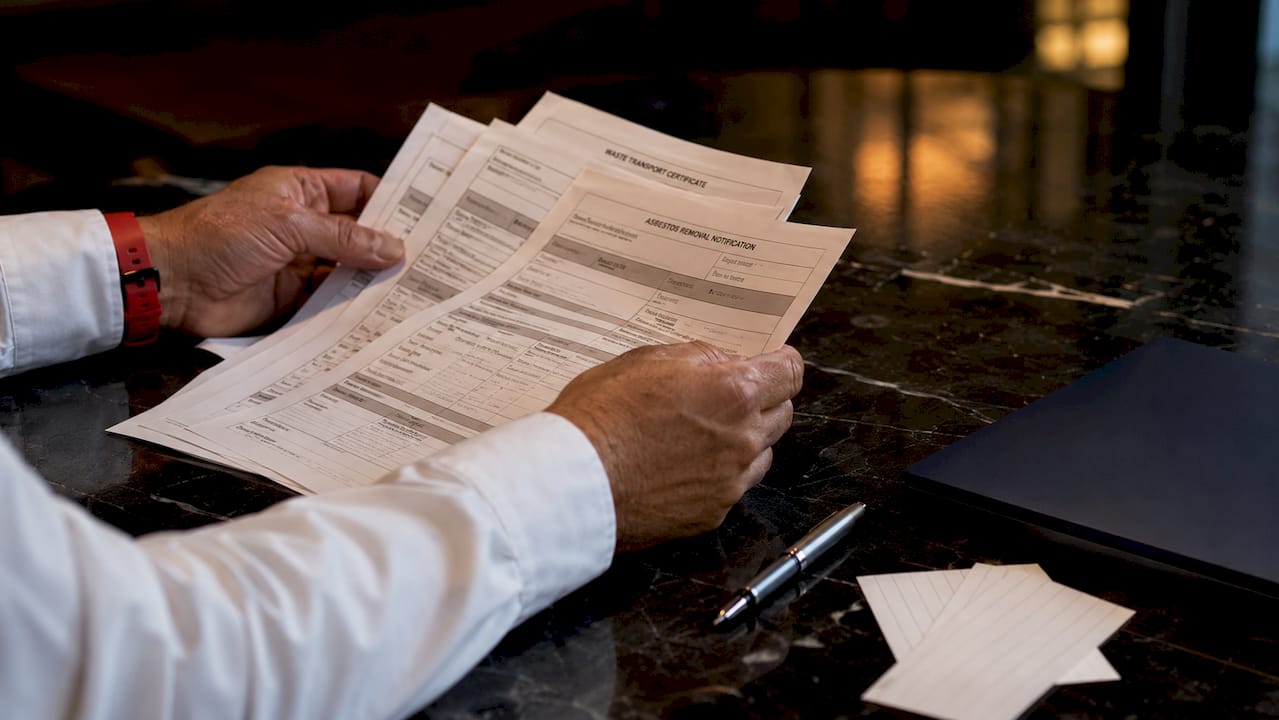
- Failure to use official waste tracking: In Australia, EPA Victoria requires asbestos waste to be tracked through its waste transport certificate system. Skipping this step is one of the most common asbestos waste management failures regulators detect.
Pro Tip: Always request a copy of the waste transport certificate before your contractor leaves the site. If they cannot produce one, the waste has not been legally disposed of, and you carry the liability.
2. how unlicensed removal and subcontracting drive non-compliance
Unlicensed removal is one of the most dangerous forms of non-compliance asbestos removal, and it is more common than most clients expect.
- Hiring unlicensed subcontractors: Two firms were fined £88,300 after an HSE investigation found they had engaged an unlicensed subcontractor for asbestos clearance, causing large-scale asbestos disturbance across a demolition site.
- Ignoring licensed survey findings: A licensed asbestos survey identifies the material. Using an unlicensed crew to act on those findings defeats the entire purpose of the survey and creates direct legal exposure for the principal contractor.
- Client liability: Clients remain legally responsible even when a licensed survey was completed. Choosing a non-compliant removal service does not transfer liability. It compounds it.
- Community and worker exposure: Poor management of unlicensed removal spreads asbestos fibres beyond the work zone. Neighbouring properties, passing pedestrians, and future occupants all face exposure risks from a single poorly managed job.
“The core failure in many asbestos disturbances is poor planning and lack of competent project management.” — HSE Inspector, cited in Construction News, March 2026.
A US company was fined $500,000 and placed on two years’ probation for improper demolition involving asbestos-containing material without proper controls. The scale of that penalty reflects how seriously regulators treat unlicensed removal, regardless of jurisdiction.
3. why poor record-keeping is a critical compliance failure
Correct physical removal of asbestos is not enough. Even correct removal is insufficient without proper documentation and waste tracking. Regulators pursue documentation violations just as aggressively as physical breaches.
| Compliance Requirement | What Regulators Check | Consequence of Failure |
|---|---|---|
| Waste transport certificate | Cross-referenced with removal notification | Fines, stop-work orders |
| WorkSafe removal notification | Matched against site inspection records | Enforcement notices |
| EPA waste tracker entry | Audited against licensed facility receipts | Financial penalties |
| Disposal facility receipt | Verified against transport records | Prosecution |
EPA Victoria fined seven contractors a combined $71,225 for failing to properly track asbestos waste, despite having notified authorities of the removal work. That detail matters. These businesses did the right thing at the start and then failed at the documentation stage. The fines were entirely avoidable.
Cross-agency intelligence sharing between safety authorities and environmental agencies is now a standard enforcement tool. Regulators compare removal notifications with waste tracking entries and disposal facility records. Gaps in that chain trigger audits automatically.
Pro Tip: Keep a dedicated compliance folder for every asbestos job. Store the removal notification, waste transport certificates, and disposal receipts together. Regulators can request these documents years after the work is completed.
4. environmental and financial impacts of improper asbestos handling
The financial consequences of illegal asbestos disposal examples extend well beyond the initial fine. They affect public budgets, property values, and long-term environmental health.
- Fly-tipping cleanup costs: A single illegal fly-tipping incident recorded in April 2026 cost approximately £2,500 in public funds to remediate. Multiply that across hundreds of incidents per year and the public cost becomes significant.
- Long-term soil contamination: Asbestos fibres buried in soil do not degrade. They remain a hazard for decades. Contaminated land requires professional asbestos soil remediation before it can be safely developed or sold.
- Property liability: Landowners who discover asbestos dumped on their property face cleanup costs even if they did not cause the dumping. Councils and state agencies can issue clean-up orders that the landowner must fund.
- Public health costs: Asbestos-related diseases including mesothelioma and asbestosis have long latency periods. Communities near illegal dump sites face elevated long-term health risks that translate into healthcare costs and compensation claims.
- Reputational damage: For businesses, a single asbestos disposal violation can result in licence suspension, exclusion from government contracts, and lasting reputational damage that outweighs any short-term cost saving.
Selecting a licensed waste carrier and an approved disposal facility is not a premium option. It is the only legally defensible option.
5. how to recognise and avoid non-compliant asbestos disposal in your project
Prevention is straightforward when you know what to look for. These steps apply to both homeowners and commercial project managers.
- Verify contractor licensing: Check that your asbestos removalist holds a current Class A or Class B licence issued by the relevant state authority. In NSW, this is verified through SafeWork NSW. Review NSW asbestos removal regulations before engaging any contractor.
- Insist on proper packaging and labelling: Asbestos waste must be double-wrapped, sealed, and labelled with the standard asbestos warning symbol before it leaves your site. Refuse to sign off on any job where this is not done.
- Demand waste tracking documentation: Request the EPA waste transport certificate and the disposal facility receipt. EPA enforcement officials have identified deliberate cost evasion as a primary driver of non-compliance. Contractors who cannot produce documentation are cutting corners somewhere.
- Treat unusually low bids as a red flag: Compliant asbestos disposal has real costs. A quote that is significantly below market rate almost always means the contractor is skipping licensed disposal, using unlicensed labour, or both.
- Watch for off-the-record subcontracting: Ask your principal contractor directly whether any subcontractors will be involved and verify their licences independently. The HSE case that resulted in £88,300 in fines began with an undisclosed unlicensed subcontractor.
- Report illegal dumping: In Australia, illegal asbestos dumping can be reported to your state EPA, local council, or the relevant workplace safety authority. Early reporting protects your community and limits your own liability if the waste is near your property.
- Use air monitoring as a verification tool: Independent air monitoring during removal confirms that fibre levels remain within safe limits. It also provides documented evidence of compliant work practice if a dispute arises later.
Key takeaways
Non-compliant asbestos disposal is detected through cross-agency record checks, and the financial and legal consequences affect both contractors and clients equally.
| Point | Details |
|---|---|
| Record-keeping triggers fines | EPA Victoria fined seven contractors $71,225 for missing waste tracking records alone. |
| Clients carry liability | Hiring a non-licensed contractor does not transfer legal responsibility away from the client. |
| Fly-tipping has direct costs | A single illegal dumping incident can cost £2,500 or more in public cleanup funds. |
| Low bids signal risk | Quotes well below market rate typically indicate unlicensed disposal or labour. |
| Documentation is the defence | Waste transport certificates and disposal receipts are your proof of compliance. |
The pattern i keep seeing on non-compliant jobs
After years working in demolition and asbestos removal across Australia, the pattern behind most non-compliance cases is not ignorance. It is pressure. Project managers under budget constraints approve the cheapest quote without checking licences. Homeowners trust a recommendation from a neighbour without asking for documentation. Contractors subcontract to save margin and do not verify the subcontractor’s credentials.
The HSE inspector’s observation that poor planning and lack of competent management drives most asbestos disturbances matches exactly what I see in practice. The technical knowledge exists. The regulations are clear. The failure is almost always organisational.
What I tell every client is this: the cost of compliant disposal is fixed and predictable. The cost of non-compliance is open-ended. A $71,225 fine across seven businesses sounds manageable until you realise those businesses also face remediation costs, legal fees, and potential licence suspension. The asbestos removal process done correctly the first time is always cheaper than fixing it after an enforcement action.
The other thing worth saying plainly is that community reporting works. Regulators rely on tip-offs to find illegal dump sites. If you see asbestos waste left on a verge or in a skip without proper labelling, report it. You are not dobbing in a neighbour. You are protecting the next person who walks past.
— Tarek
Asbestos disposal done right: how Missiondemolition can help
Choosing the wrong contractor for asbestos removal is the single fastest way to inherit someone else’s compliance problem. Missiondemolition provides fully licensed asbestos removal and disposal services across Sydney and NSW, with every job backed by proper waste tracking documentation, EPA-compliant transport, and disposal at approved facilities.
Every Missiondemolition project includes the paperwork trail that protects you if a regulator ever asks questions. From residential renovations to large commercial demolitions, the team handles licensed asbestos removal and professional demolition services with the compliance standards that keep clients off enforcement lists. Get in touch for a transparent quote and same-day response.
FAQ
What counts as non-compliant asbestos disposal?
Non-compliant asbestos disposal includes illegal dumping, improper packaging, use of unlicensed contractors, failure to use official waste tracking systems, and storing asbestos waste at unauthorised sites.
Can a homeowner be fined for asbestos disposal violations?
Yes. Homeowners who hire unlicensed contractors or fail to ensure proper waste documentation remain legally liable for disposal violations, even if they did not personally handle the material.
How does EPA victoria detect missing asbestos waste records?
EPA Victoria cross-references removal notifications with waste transport certificates and disposal facility records. Gaps in that chain trigger audits and fines.
What are the penalties for illegal asbestos disposal in australia?
Penalties vary by state and severity. EPA Victoria issued combined fines of $71,225 across seven contractors for record-keeping failures alone. Criminal charges and licence cancellation are possible for more serious violations.
How do i verify that my asbestos contractor is licensed?
In NSW, check the SafeWork NSW licence register before engaging any contractor. Ask for the licence number in writing and confirm it is current and covers the class of work required for your project.